
Most SaaS companies spend the majority of their budget on acquisition and treat retention as something that happens naturally if the product is good enough. The data says otherwise.
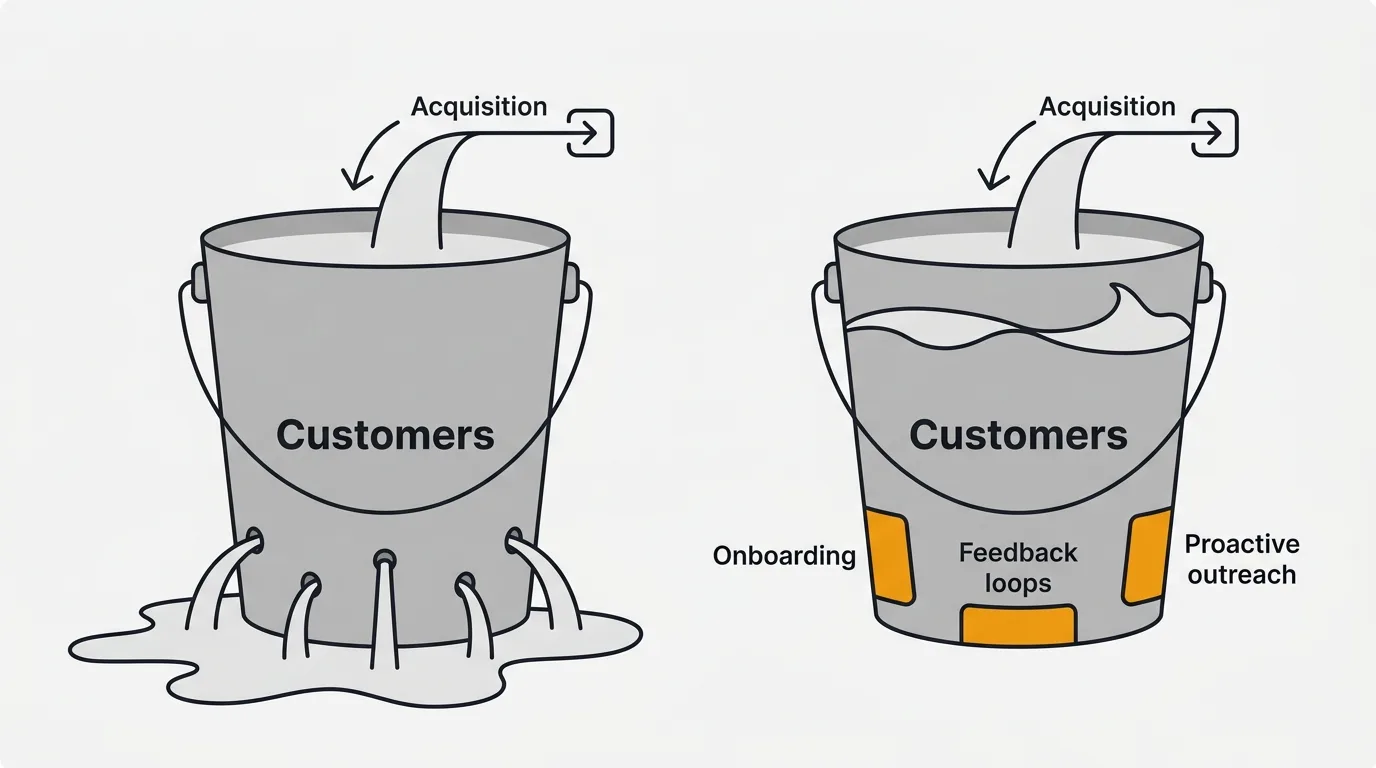
Acquiring a new customer costs 5 to 25 times more than retaining an existing one (Harvard Business Review). A 5% improvement in retention can increase profits by 25 to 95% (Bain & Company). The probability of selling to an existing customer is 60-70%, compared to 5-20% for a new prospect. Yet customer acquisition cost in SaaS has risen 55% over the past three years.
The math is clear. Here are the strategies that actually move the needle, with real numbers from companies that implemented them.
The economics of retention
Before diving into strategies, it helps to understand what you are working with.
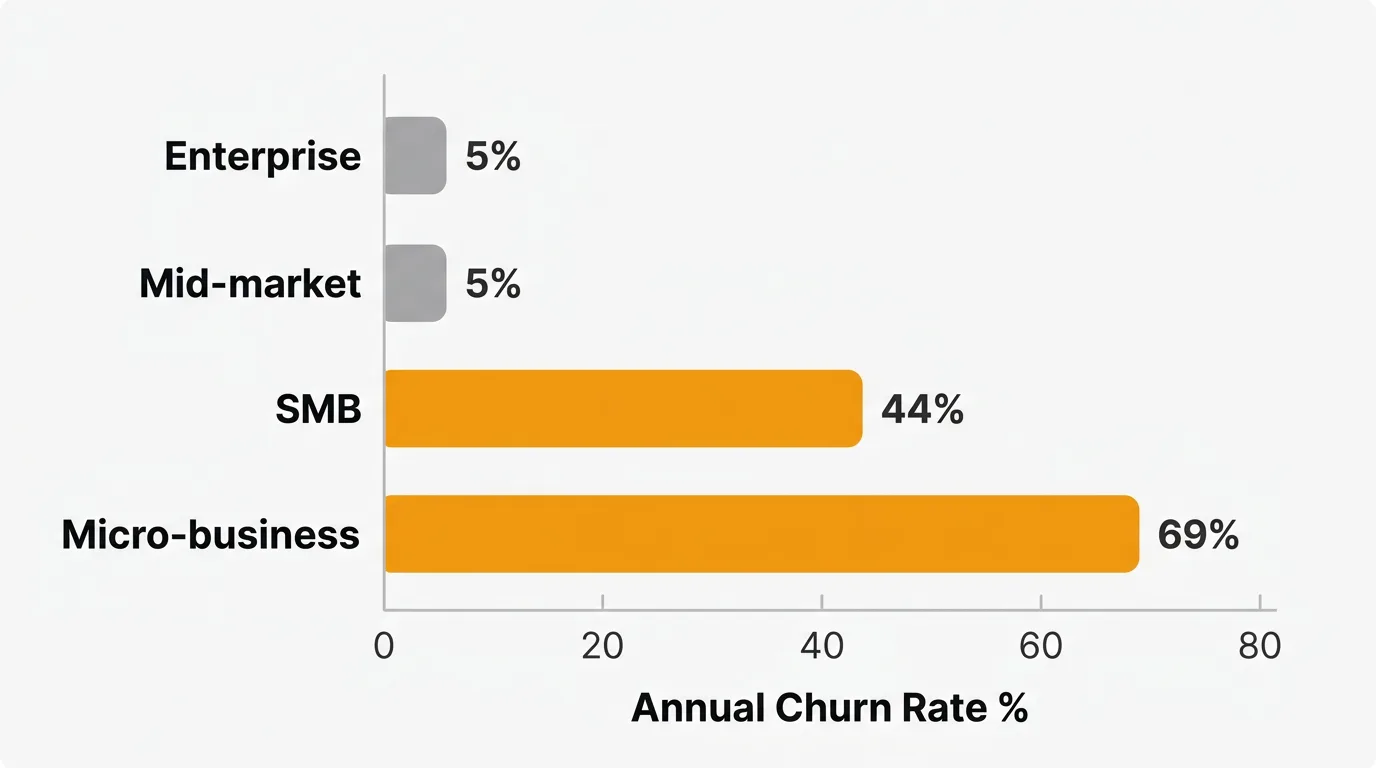
SaaS churn benchmarks (2026 data):
| Segment | Monthly churn | Annual churn |
|---|---|---|
| Enterprise SaaS (1,000+ employees) | 1-2% | 3-7% |
| Mid-market SaaS | 1.5-3% | ~5% |
| SMB-focused SaaS | 3-7% | 30-58% |
| Micro-business (under 10 employees) | ~9% | ~69% |
If your monthly churn is above 5%, you are losing more than half your customer base every year. Even a 3% monthly rate means losing roughly a third. The strategies below target specific churn drivers that compound over time.
8 retention strategies with proven results
1. Fix your onboarding
The first 90 days determine whether a customer stays or leaves. Users who do not reach their "aha moment" during onboarding are the most likely to churn — and the most expensive to lose, because you spent the full acquisition cost but captured minimal lifetime value.
Groove found that retained users had initial sessions averaging 3 minutes and 18 seconds. Churned users lasted only 35 seconds. Retained users logged in 4.4 times per day on average; churned users logged in 0.3 times.
What to do:
- Identify your activation metric — the specific action that correlates with long-term retention (Slack: 2,000 messages sent; Dropbox: one file saved to a shared folder)
- Design onboarding around reaching that action, not touring features
- Use progress indicators, contextual prompts, and milestone emails at 7, 30, and 60 days
- Measure time-to-first-value and optimize it relentlessly
Example: Zapier focused on guiding users to complete their first integration during onboarding. This milestone-based approach dropped their churn to 6-10%.
2. Build a feedback loop and close it
Customers who feel heard stay longer. Customers who feel ignored leave. It sounds obvious, but most companies collect feedback and never act on it — or worse, never tell the customer what happened.
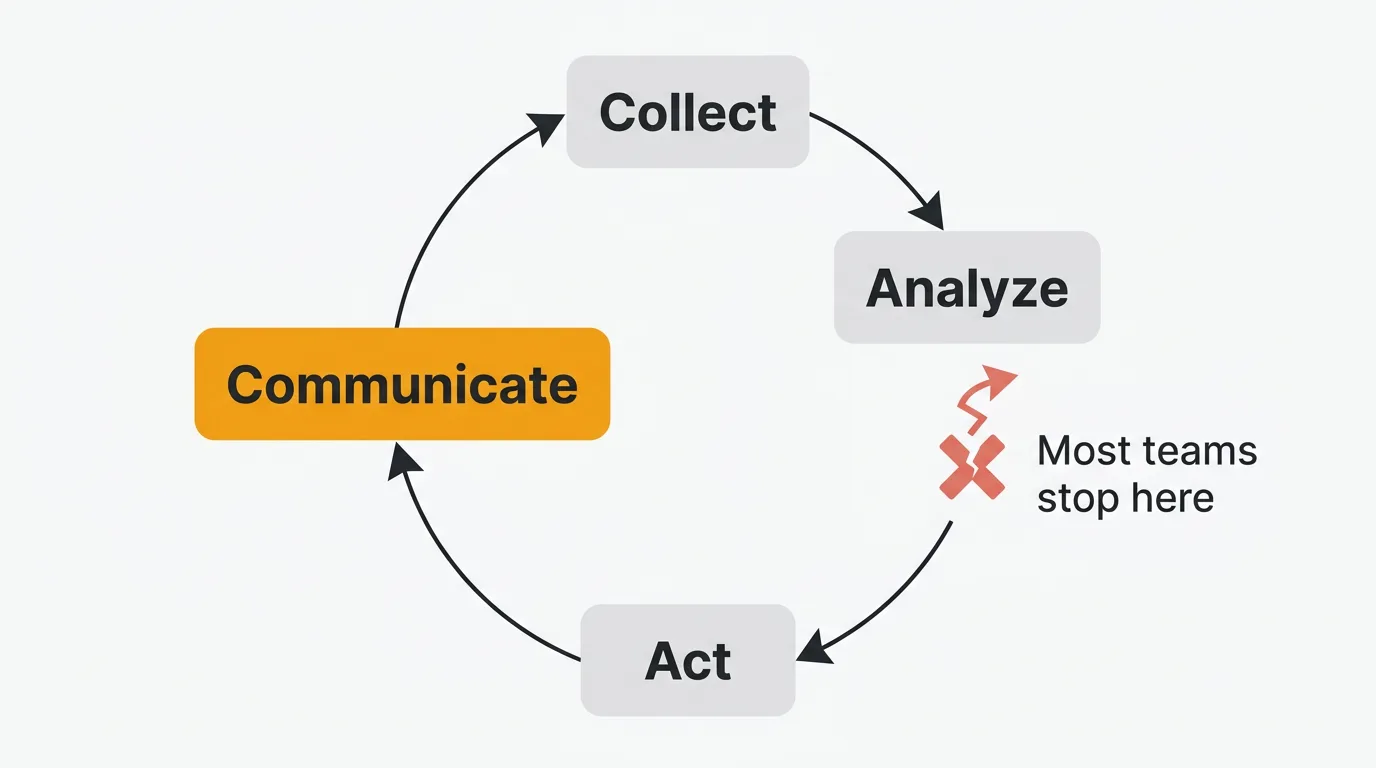
The feedback loop has four stages: collect, analyze, act, communicate. Most companies stop after step one or two. The retention value comes from step four — telling customers their feedback led to a change.
What to do:
- Collect feedback systematically through in-app widgets, feedback boards, NPS surveys, and churn surveys
- Prioritize fixes using an impact-effort framework
- Close the loop: when you build something a customer requested, tell them. When you decide not to build something, explain why
- Make your roadmap public so customers can see their voice matters
Example: TripMaster uncovered a 20% onboarding drop-off through systematic feedback collection. Targeted improvements based on that feedback generated $504,758 in net new ARR within one year.
3. Implement customer health scoring
Waiting for customers to complain before acting is reactive. By the time a customer contacts support about a problem, they have already considered leaving. Health scoring identifies at-risk accounts before they reach that point.
What to do:
- Build a composite score from: login frequency, feature adoption breadth, support ticket volume and sentiment, payment history, and engagement with success resources
- Set automated triggers when scores drop below thresholds (declining logins over two weeks, feature usage drop-off, payment failure)
- Route at-risk accounts to a retention playbook: personalized outreach, executive check-in, or guided re-engagement
Example: Groove sent targeted intervention emails to users with low engagement metrics. The campaigns achieved a 26% response rate and 40% retention rate among at-risk users, contributing to a 71% overall churn reduction.
4. Drive feature adoption
Most customers use a fraction of your product. They signed up for one feature and never discovered the rest. When a competitor offers that one feature for less, they leave — not because your product is worse, but because they never experienced the difference.
What to do:
- Identify underused features that correlate with retention
- Use in-app tooltips, guided tours, and contextual suggestions to surface them
- Send targeted emails highlighting features relevant to each user's workflow
- Track feature adoption by cohort and tie it to retention rates
Example: SmartReach.io combined health scoring with feature adoption tracking. Automated alerts when users stopped engaging with key features drove targeted re-engagement that reduced churn by 35%.
5. Run proactive outreach campaigns
Do not wait for problems. Reach out to customers before they disengage.
What to do:
- Schedule automated check-ins at key lifecycle moments: 30 days post-onboarding, after major feature launches, before renewal dates
- Segment outreach by customer health score, plan tier, and usage patterns
- Personalize the message — "I noticed you have not tried [feature] yet" works better than "Just checking in"
- For high-value accounts, assign a dedicated success manager with quarterly business reviews
Example: StatusPage.io implemented automated re-engagement campaigns targeting accounts showing declining usage. The program saved $1.2 million in ARR.
6. Reduce involuntary churn
20 to 40% of total churn in SaaS is involuntary — failed credit cards, expired payment methods, billing errors. This is the easiest churn to fix because the customer did not decide to leave.
What to do:
- Implement smart retry logic for failed payments (retry on different days, not just immediately)
- Send pre-dunning emails before cards expire
- Offer multiple payment methods and make updating payment info easy
- Use a payment recovery service that handles retry optimization automatically
7. Offer pricing flexibility
Rigid pricing forces an all-or-nothing decision. When a customer's needs change — budget cuts, team downsizing, seasonal fluctuation — they either keep paying full price or cancel entirely.
What to do:
- Offer downgrade paths that let customers reduce their plan instead of canceling
- Consider usage-based pricing components (companies with usage-based models see 2.1% monthly churn versus 5.6% for flat-rate)
- Provide annual plan discounts that increase commitment without forcing it
- For at-risk accounts, offer retention discounts or plan pauses
Example: Rephrasely offered discounts on annual plans to convert monthly subscribers. The approach reduced churn by 56%.
8. Build community and co-creation
When customers participate in shaping your product, they develop psychological ownership. They are not just users — they are contributors. This investment raises switching costs in a way that contract lock-in cannot.
What to do:
- Create a public feedback board where customers can submit ideas and vote on priorities
- Share your changelog and credit the customers whose feedback drove changes
- Build a community forum or Slack group for power users
- Run beta programs that give active customers early access to new features
Example: HubSpot built a Customer Happiness Index (CHI) tracking usage frequency, social engagement, and feature adoption. Personalized interventions based on this index retained 33% of previously unhappy customers.
How to prioritize these strategies
Not every strategy applies equally to every company. Here is a decision framework:
| If your churn is driven by... | Start with... |
|---|---|
| Users not reaching value | Onboarding optimization (#1) |
| Users leaving without explanation | Feedback loops (#2) and health scoring (#3) |
| Payment failures | Involuntary churn reduction (#6) |
| Competitor switching | Feature adoption (#4) and community (#8) |
| Budget constraints | Pricing flexibility (#7) |
| General disengagement | Proactive outreach (#5) |
If you do not know what is driving your churn, start with feedback loops. You cannot fix a problem you do not understand, and systematic feedback collection is the fastest way to surface the root cause.
Common mistakes
Treating retention as a support function. Retention is a product function. Support handles individual problems; retention addresses systemic patterns. If your retention strategy lives in the support team, it is too late by definition.
Measuring only revenue churn. Logo churn (the number of customers who leave) matters as much as revenue churn (the dollars they take with them). A company can have positive net revenue retention while losing 30% of its customer base annually. That is not retention — it is expansion revenue masking a churn problem.
Offering discounts instead of fixing the product. Retention discounts buy time. They do not solve the underlying problem. If customers leave because onboarding is broken, a 20% discount does not fix onboarding. Use discounts as a bridge while you fix root causes, not as a permanent strategy.
Ignoring silent accounts. The accounts most likely to churn are not the ones filing support tickets. They are the ones that stopped logging in and never complained. Silent accounts churn faster than vocal ones — build systems to detect and engage them.
Frequently asked questions
What is a good churn rate for SaaS?
It depends on your segment. Enterprise SaaS companies target less than 5% annual churn. Mid-market targets less than 10%. SMB churn rates of 3-5% monthly are common but problematic — any monthly churn above 3% means you are losing over 30% of customers annually.
How do I calculate customer retention rate?
Retention rate = ((Customers at end of period - New customers acquired) / Customers at start of period) × 100. For example, if you started the quarter with 200 customers, acquired 50 new ones, and ended with 210: ((210 - 50) / 200) × 100 = 80% retention.
Which retention metric should I track?
Track three: logo retention (percentage of customers retained), net revenue retention (accounts for expansion and contraction), and gross revenue retention (excludes expansion). Together they tell you how many customers stay, how much existing customers spend, and how much revenue you lose from downgrades and cancellations.
How does customer feedback reduce churn?
Feedback reduces churn through three mechanisms. First, it surfaces dissatisfaction before it becomes cancellation — customers who complain are giving you a chance to fix the problem. Second, acting on feedback improves the product for everyone, not just the person who reported the issue. Third, closing the feedback loop — telling customers what changed because of their input — builds loyalty. For a deeper look, see our guide on the customer feedback loop.
When should I invest in retention versus acquisition?
If your monthly churn exceeds 5%, investing in acquisition is filling a leaky bucket. Fix the retention fundamentals first (onboarding, feedback, health scoring), then scale acquisition. The exception is pre-product-market-fit companies that need more users to learn what to build — in that case, acquisition and feedback collection should happen simultaneously.

Authored by James Morton
Founder of Quackback. Building open-source feedback tools.
Try Quackback
The open-source feedback platform. Boards, voting, and roadmaps.
Get startedStar on GitHub305