 Quackback
7 Best Featurebase Alternatives in 2026 (Including Open Source)
Looking for a Featurebase alternative? Compare 7 feedback and support tools on per-seat pricing, AI costs, self-hosting and fit. Honest pros and cons for each.
On this page
Featurebase grew from a feedback board into a customer support suite. Feedback boards, a roadmap and a changelog now sit beside a support inbox, a help center and an AI agent called Fibi. For many teams that breadth is the reason to choose it.
The cost grows in two directions. Every paid plan is priced per seat: Growth is $29, Professional $59 and Enterprise $99 per seat a month, billed annually. Fibi adds $0.49 for each conversation it resolves, unlimited Copilot is $19 per seat, and removing the Featurebase badge is $69 a month. A team of 10 on Professional pays $590 a month before any AI. For a full breakdown, see Featurebase Pricing in 2026.
Featurebase is also closed source and hosted only. If you want to read the code, self-host or keep your data in your own database, you need something else. Here are seven alternatives, from like-for-like suites to simpler feedback boards.
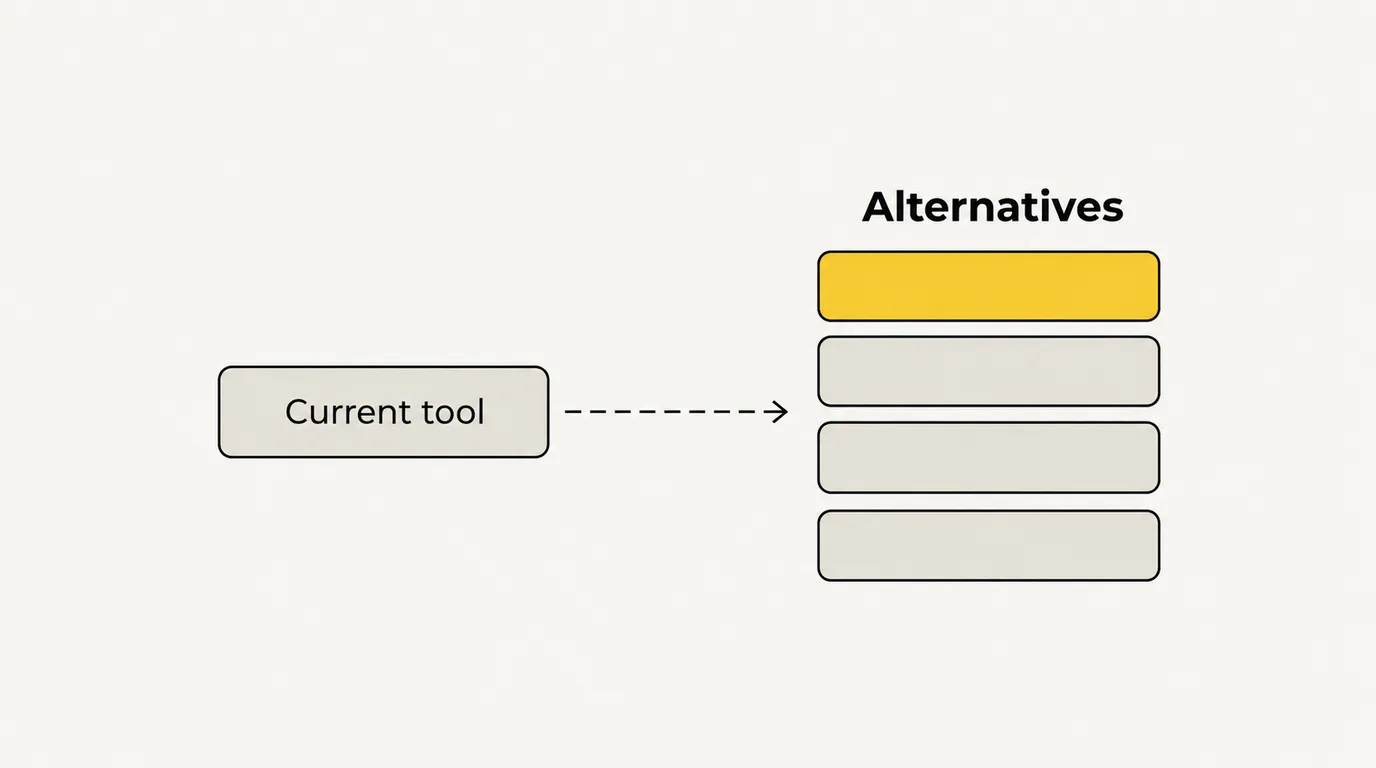
The best Featurebase alternatives in 2026 are Quackback, Canny, Intercom, Frill, Nolt, Sleekplan and Fider. Quackback is the closest match: feedback, a support inbox, a help center and AI like Featurebase, plus a status page, with seats included in the plan and the option to self-host every feature. Here are all seven ranked:
- Quackback — Open source. Feedback, support, help center and status page in one, with Quackback AI. A Free Cloud plan, or self-host every feature.
- Canny — Mature hosted feedback tool. Free for 25 tracked users; Pro from $79/mo billed yearly.
- Intercom — Deep help desk with the Fin AI agent. From $29/seat/mo plus $0.99 per AI outcome.
- Frill — Clean feedback board, roadmap and changelog. From $25/mo.
- Nolt — Simple, flat-priced feedback boards. From $29/mo billed annually.
- Sleekplan — Widget-first feedback, changelog and surveys. From $13/mo.
- Fider — Open-source voting board. Free to self-host; Cloud Pro $25/mo.
Pricing last verified November 2026 for Featurebase, Quackback, Canny, Intercom and Nolt, and October 2026 for Frill, Sleekplan and Fider. Vendors may change plans and pricing without notice. Check each vendor's pricing page for the latest figures.
Why teams switch from Featurebase
- Per-seat pricing. Every teammate who works in Featurebase needs a paid seat. A team of 10 pays $290 a month on Growth and $590 on Professional. Workflows and SLAs start on Professional.
- AI billed per resolution. Fibi costs $0.49 for each conversation it fully resolves, and unlimited Copilot is $19 per seat a month. Support volume drives the bill.
- Closed source, hosted only. You can't self-host Featurebase, audit its code or run it in your own region.
- No status page. Teams that want incidents and maintenance beside their help center add another tool.
- More than you need. Some teams only use the feedback board and pay per seat for a support suite they never open.
Featurebase does some things well that you should weigh before you leave. Its startup program takes 86% off for companies under 2 years old with fewer than 6 employees and under $3M raised, with a year of Fibi included. It has a SOC 2 Type II report on every plan. And it is actively developed, with a polished interface.
1. Quackback
Quackback is open-source (AGPL-3.0) software for customer feedback and support. It covers the same ground as Featurebase, feedback, a support inbox, a help center and AI, and adds a status page. Use Quackback Cloud, or self-host it with every feature.
Feedback is the core: feedback boards with voting, a public roadmap and a changelog that emails everyone who voted when you ship what they asked for. Beside it sit a support inbox for live chat, email and GitHub issues, a help center and a status page. A conversation becomes a feedback post or a vote in one click, so support and product work from the same record.
Quackback AI works on both sides. An AI agent answers customers from your help center and hands over to your team, on Pro and up. Copilot drafts replies and answers your team's questions on every plan. Duplicate suggestions surface related requests for a person to merge, and post summaries pull out key quotes and next steps. When you self-host, you connect your own model provider key.
The MCP server lets Claude, Cursor and other AI tools search, triage and respond to your feedback. It's on Cloud Pro and up, and in every self-hosted install.
Key features:
- Feedback boards with voting, statuses and comments
- Public roadmap, and a changelog that emails voters when their request ships
- Support inbox for live chat, email and GitHub issues, with tickets, SLAs and macros
- Help center with Ask AI, and a status page with incidents and subscriber emails
- Quackback AI: an agent for customers, Copilot for your team, duplicate suggestions and post summaries
- MCP server, webhooks and a REST API
- Integrations with Slack, Linear, Jira, GitHub and more, on Business and up
- OIDC single sign-on on Enterprise, and your own domain from Pro
Pricing: Quackback Cloud has a Free plan with 1 seat, 1 board and 50 posts, and every signup starts with a 14-day Pro trial. Paid plans are a flat workspace price with seats included (5 on Pro, 20 on Business, unlimited on Enterprise), from $29/mo billed annually. A team of 10 fits Business at $59/mo. Self-hosting is free under AGPL-3.0 with every feature: run it with Docker, or deploy the Railway template and pay Railway for the servers.
Pros:
- Feedback, support, a help center and a status page in one product
- Seats included in the plan, where Featurebase charges per seat
- Quackback AI included, with no per-resolution fee
- Open source: self-host every feature and keep your data in your own Postgres
- A status page, which Featurebase doesn't have
Cons:
- Newer, with a smaller community and integration catalogue than Featurebase
- Support channels are live chat, email and GitHub issues, with no WhatsApp, SMS or social
- No startup discount like Featurebase's, and no SOC 2 report yet
- Feedback comes across by CSV; there's no Featurebase importer, and past support conversations stay behind
Best for: Teams that want Featurebase's scope with the source code, the option to self-host, or seats included in the plan.
For a detailed side-by-side breakdown, see the full Quackback vs Featurebase comparison. To move your data, follow How to Migrate from Featurebase.
Try Quackback — every signup starts with a 14-day Pro trial, then keeps a Free plan if you don't upgrade. Or self-host it with every feature. Start free trial | Self-host with Docker | View on GitHub
2. Canny
Canny is the most established hosted feedback tool. It covers feature request boards, voting, a roadmap and a changelog, and its Autopilot AI finds feature requests in conversations from tools like Intercom, Zendesk and Help Scout, even on the free plan.
Canny prices by tracked users, anyone who posts, votes or comments, rather than by seat. The free plan covers 25 tracked users and 5 managers. Pro is $79/mo billed yearly for 100 tracked users and 10 managers, and Business is by quote with SSO. Canny has a SOC 2 Type II report available on request.
Canny doesn't have a support inbox or help center, so it replaces Featurebase's feedback side only.
Pricing: Free (25 tracked users). Pro from $79/mo billed yearly. Business by quote.
Pros:
- Mature product with a large integration library
- Autopilot captures requests from your existing help desk
- SOC 2 Type II report on request
Cons:
- Price rises with tracked users, so popular boards cost more
- No support inbox, help center or status page
- Closed source, hosted only
Best for: Teams that keep support in another help desk and want feature requests pulled out of it automatically.
3. Intercom
Intercom, whose company is now called Fin, is the deeper help desk if Featurebase's support side is what you outgrew. It has a shared inbox, live chat, WhatsApp, SMS and phone, native mobile SDKs, a large app store and Fin, one of the most mature AI support agents.
Seats are $29, $85 or $132 per seat a month on Essential, Advanced and Expert, and Fin adds $0.99 per outcome. Copilot is $29 per agent a month billed annually. Salesforce has agreed to buy the company; check the pricing page for current terms.
Intercom has no feedback boards, roadmap or changelog, so it replaces Featurebase's support side only.
Pricing: From $29/seat/mo. Fin $0.99 per outcome. Copilot $29/agent/mo.
Pros:
- Many channels, including WhatsApp, SMS and phone
- Mature AI agent and automation
- Native mobile SDKs and a large app store
Cons:
- Per-seat and per-outcome pricing costs far more than Featurebase
- No feedback boards, roadmap, changelog or status page
- Closed source, hosted only
Best for: Support teams that need more channels and automation than Featurebase offers.
4. Frill
Frill is a clean, focused feedback tool with an ideas board, a roadmap and a changelog in one widget. It is simpler than Featurebase and priced by plan rather than by seat.
The Startup plan is $25/mo for 50 ideas, Business is $49/mo, and white labeling comes with Growth at $149/mo. Smart Merge uses AI to suggest duplicates, and integrations include Zendesk, Help Scout and Intercom.
Pricing: From $25/mo. Business $49/mo. Growth $149/mo.
Pros:
- Clean interface that customers find easy
- Flat plan pricing, not per seat
- Ideas, roadmap and changelog in one widget
Cons:
- No support inbox or help center
- The entry plan caps ideas at 50
- Closed source, hosted only
Best for: Small teams that only want feedback, a roadmap and a changelog, without a support suite.
5. Nolt
Nolt is a simple, well-designed feedback board. Plans are flat and priced by board, not by seat or user.
Essential is $29/mo billed annually for 1 board, Pro is $69/mo for 5 boards, and Enterprise is by quote with unlimited boards and SAML or OIDC SSO. JWT single sign-on, Slack, Discord, GitHub and Trello come with Essential. There's no free plan, only a 10-day trial.
Pricing: Essential $29/mo, Pro $69/mo, billed annually. Enterprise by quote.
Pros:
- Simple to set up and pleasant to use
- Flat pricing that doesn't grow with your team
- JWT single sign-on on every plan
Cons:
- No free plan
- One board on the entry plan
- No support inbox or help center
Best for: Teams that want a simple feedback board with predictable pricing.
6. Sleekplan
Sleekplan is a widget-first tool that combines feedback, a roadmap, a changelog and satisfaction surveys. Its free plan includes a board and a changelog with unlimited feedback and subscribers.
Paid plans run from $13 to $38/mo. Sleekplan ranks requests with an impact score from engagement and recency, uses AI to dedupe feedback, and has a hosted MCP server.
Pricing: Free plan. Paid plans $13 to $38/mo.
Pros:
- Low prices and a usable free plan
- Built-in surveys beside feedback
- One embeddable widget
Cons:
- No support inbox or help center
- Smaller ecosystem than Featurebase or Canny
- Closed source, hosted only
Best for: Small SaaS teams that want feedback, a changelog and surveys in one cheap widget.
7. Fider
Fider is an open-source voting board under AGPL-3.0, built with Go, React and Postgres. It is free to self-host, and Fider Cloud Pro is $25/mo.
Fider does one job: customers post ideas, vote and comment. There's no roadmap view, changelog, support inbox or AI, but it is light, stable and easy to run.
Pricing: Free to self-host. Cloud Pro $25/mo.
Pros:
- Open source and free to self-host
- Lightweight and stable
- OAuth2 sign-in with custom providers
Cons:
- No roadmap, changelog, support inbox or AI
- Basic customization
- Few native integrations
Best for: Teams that want a minimal open-source voting board and nothing else.
Comparison table
| Featurebase | Quackback | Canny | Intercom | Frill | Nolt | Sleekplan | Fider | |
|---|---|---|---|---|---|---|---|---|
| Starting price | Free (1 seat); $29/seat/mo | Free (1 seat); paid from $29/mo | Free (25 tracked users); $79/mo | $29/seat/mo | $25/mo | $29/mo | Free; $13/mo | Free (self-host); $25/mo |
| Pricing model | Per seat | Per workspace, seats included | Tracked users | Per seat | Per plan | Per plan | Per plan | Per plan |
| Feedback boards | Yes | Yes | Yes | No | Yes | Yes | Yes | Yes |
| Roadmap and changelog | Yes | Yes | Yes | No | Yes | Yes | Yes | No |
| Support inbox | Yes | Yes | No | Yes | No | No | No | No |
| Help center | Yes | Yes | No | Yes | No | No | No | No |
| Status page | No | Yes | No | No | No | No | No | No |
| AI agent | $0.49/resolution | Included from Pro | No | $0.99/outcome | No | No | No | No |
| Open source / self-host | No | Yes (AGPL-3.0) | No | No | No | No | No | Yes (AGPL-3.0) |
How to choose
If you want everything Featurebase does, with seats included in the plan: Quackback covers feedback, support, a help center and AI, adds a status page, and includes seats in the plan. You can also self-host it.
If you only use Featurebase's feedback board: Frill, Nolt or Sleekplan cost less with flat plans. Canny is the most mature option if your requests come from another help desk.
If you outgrew Featurebase's support side: Intercom has more channels and automation, at a much higher price.
If you want open source: Quackback for the full suite, Fider for a minimal voting board.
If you're an eligible startup: Featurebase's startup program, 86% off for companies under 2 years old with fewer than 6 employees and under $3M raised, is hard to beat for the first year.
Frequently asked questions
What is the best open-source Featurebase alternative?
Quackback is the closest open-source match. It has feedback boards, a roadmap, a changelog, a support inbox, a help center, a status page and Quackback AI, under AGPL-3.0. You can self-host every feature with Docker, or use Quackback Cloud. Fider is also open source but covers only a voting board.
Is there a free alternative to Featurebase?
Yes. Quackback Cloud has a Free plan with 1 seat, 1 board and 50 posts, and the open-source edition is free to self-host with every feature. Canny is free for 25 tracked users, Sleekplan has a free plan, and Fider is free to self-host. Featurebase's own free plan covers 1 seat, 1 board and 1 roadmap.
How does Featurebase pricing compare to its alternatives?
Featurebase charges per seat: $29, $59 or $99 per seat a month billed annually, plus $0.49 per Fibi resolution. Quackback charges a flat workspace price with seats included, from $29/mo billed annually, so a team of 10 pays $59/mo on Business against $290/mo on Featurebase Growth. Frill, Nolt and Sleekplan use flat plans from $13 to $69/mo. See Featurebase Pricing in 2026.
Can I migrate from Featurebase?
Yes, with some manual work. Export your posts as a CSV, map them to the new tool's import format and preview before you run it. Help-center articles and past support conversations need their own plan. See How to Migrate from Featurebase.
What does Featurebase do better than Quackback?
Featurebase has a startup program with 86% off, a SOC 2 Type II report on every plan, a larger community and a polished, actively developed product. Quackback adds a status page, open source and self-hosting, and seats included in the plan.

Written by James Morton. Founder of Quackback, the open-source platform for customer feedback and support.
Quackback is open-source software for customer feedback and support
Feedback boards, a public roadmap, a changelog and a support inbox in one place. Try Pro free for 14 days, no card needed.
Keep reading
7 Best Crisp Alternatives in 2026 (Including Open Source)
Crisp gates its knowledge base, AI chatbot and WhatsApp to Essentials. Compare 7 live chat alternatives, including open-source Chatwoot, on price and features.
8 Best Freshdesk Alternatives in 2026 (Including Open Source)
Freshdesk has no free plan and gates SLA policies and routing to Pro. Compare 8 alternatives, including open-source Zammad and FreeScout, on price and fit.
8 Best Help Scout Alternatives in 2026 (Including Open Source)
Help Scout charges per user and $0.75 per AI resolution. Compare 8 alternatives, including open-source FreeScout and Chatwoot, on pricing, channels and fit.